
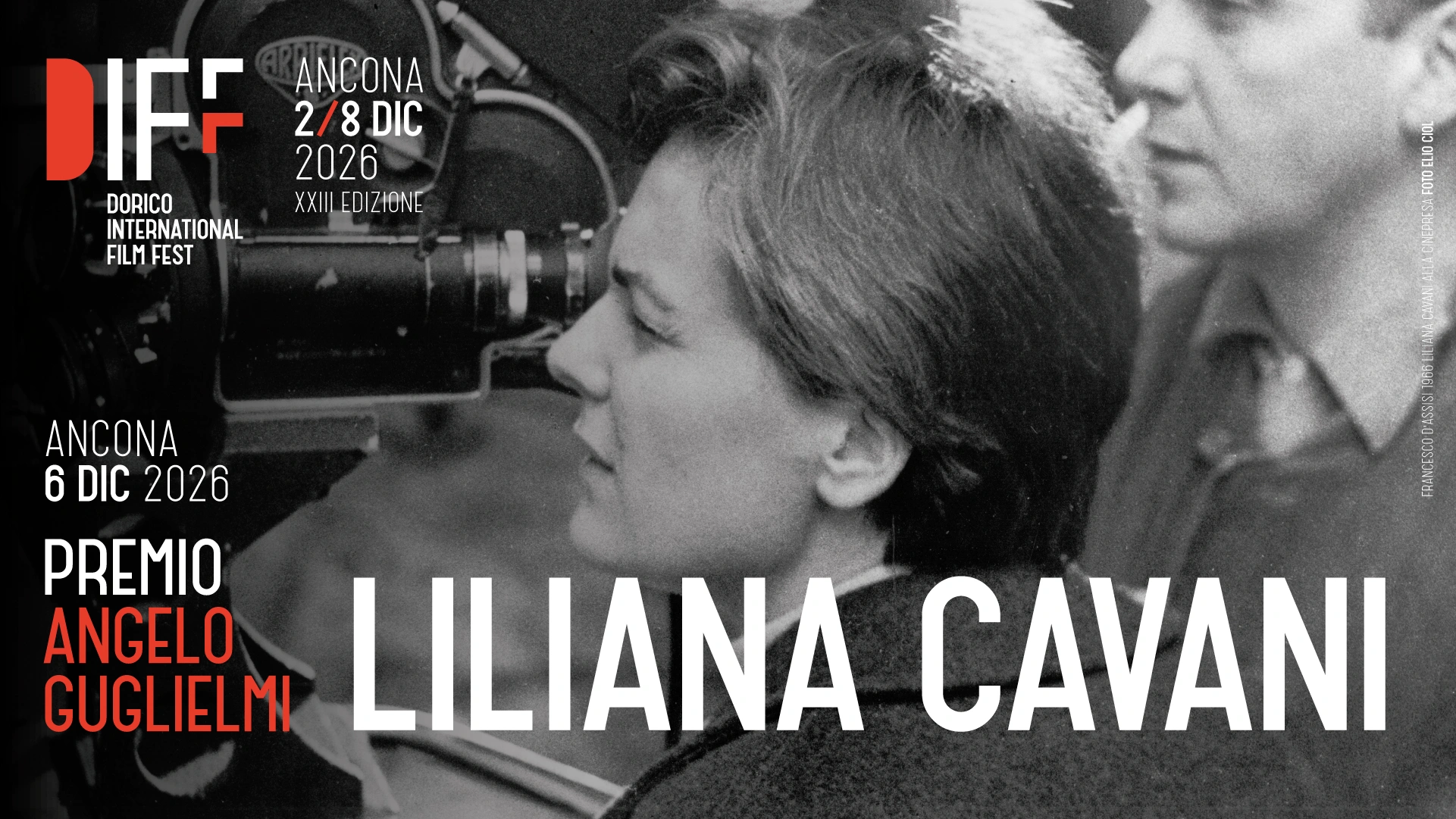
Il Premio Angelo Gugliemi 2026 sarà assegnato ad un’autentica leggenda del cinema italiano, Liliana Cavani, nel 65esimo anniversario da quando ha iniziato a muovere i primi passi dietro alla macchina da presa.
Regista e sceneggiatrice, partita dai documentari e dalle inchieste di stampo sociale, Liliana Cavani è arrivata a firmare alcuni tra i film più iconici degli anni ’70, come I cannibali (1970), Il portiere di notte (1974) e Al di là del bene e del male (1977). Opere coraggiose e controverse, che hanno segnato la storia del nostro cinema e continuano a far discutere ancora oggi.
Liliana Cavani ritirerà il prestigioso Premio Angelo Guglielmi all’Auditorium della Mole Vanvitelliana di Ancona. Domenica 6 dicembre alle 17.30 sarà ospite del Festival con un incontro in cui racconterà il suo cinema e il suo percorso e introdurrà la proiezione di Francesco D’Assisi (1966), suo primo lungometraggio di finzione, prodotto da Angelo Guglielmi per Rai.
The 2026 Angelo Guglielmi Award will be presented to a true legend of Italian cinema, Liliana Cavani, on the 65th anniversary of her first steps behind the camera.
A director and screenwriter who began with documentaries and socially engaged investigative reports, Liliana Cavani went on to make some of the most iconic films of the 1970s, such as I cannibali (1970), Il portiere di notte (The Night Porter, 1974) and Al di là del bene e del male (Beyond Good and Evil, 1977). These bold and controversial works have left their mark on the history of Italian cinema and continue to spark debate to this day.
Liliana Cavani will receive the prestigious Angelo Guglielmi Award at the Auditorium of the Mole Vanvitelliana in Ancona. On Sunday 6 December at 5:30 PM, she will be a guest of the Festival for a conversation about her cinema and her career, and will introduce the screening of Francesco d’Assisi (1966), her first fiction feature, produced by Angelo Guglielmi for RAI.
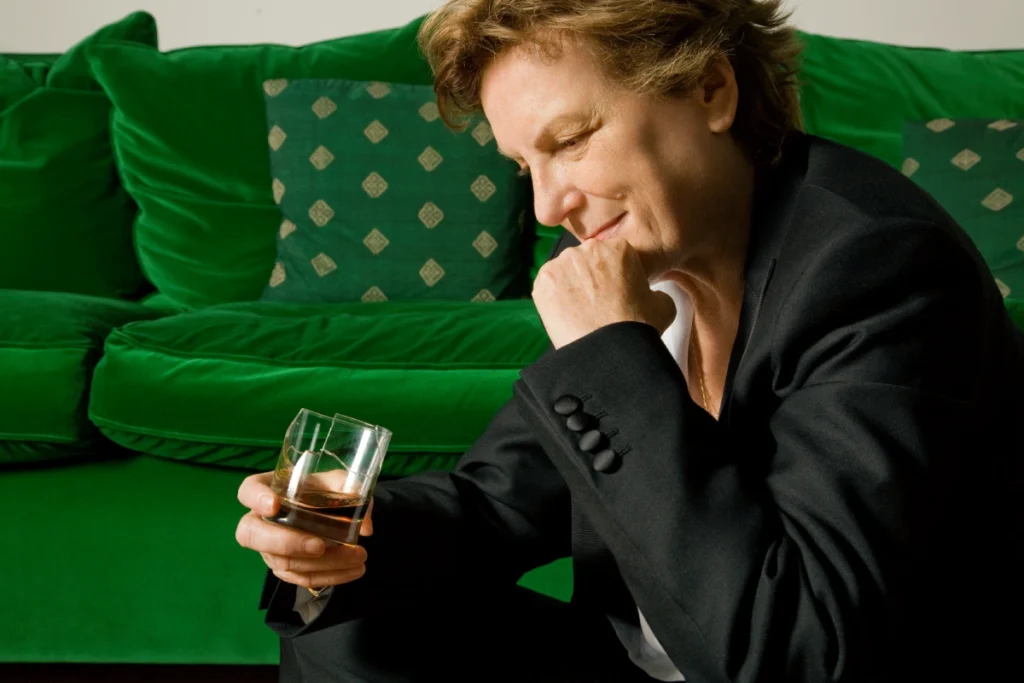
Nata a Carpi (Modena), laureata in lettere antiche all’Università di Bologna, diplomata al Centro sperimentale di cinematografia di Roma, Liliana Cavani realizza a partire dal 1962 importanti documentari alla Rai fra i quali Storia del Terzo Reich (1962), L’età di Stalin, Le donne nella Resistenza 1963, La casa in Italia (1964), Philippe Pétain: processo a Vichy, che ottiene il Leone d’Oro per il documentario alla Mostra di Venezia nel 1965. Esordisce nel lungometraggio nel 1966 con il film per la tv Francesco d’Assisi, protagonista Lou Castel, opera con cui ottiene la notorietà, presentata alla Mostra di Venezia e premiata come miglior film al Festival di Valladolid. Le figure storiche di cui Liliana Cavani si occupa la interessano per l’attualità del loro insegnamento, che offre modelli non violenti di contestazione degli ordini esistenti. Ciò avviene anche nel caso del successivo Galileo (1968), girato per il grande schermo e in concorso alla Mostra di Venezia, dove, accanto al ritratto dello scienziato, emerge l’inquieta figura di Giordano Bruno. Vi si legge il conflitto seicentesco fra scienza e religione, allusivo a quello moderno fra individuo e potere. Gira poi I cannibali (1970), con Pierre Clémenti e Britt Ekland, opera metaforica che allude al “cannibalismo” del potere rispetto alle spinte antagoniste della società. Il film è presentato alla Quinzane di Cannes quindi al Festival di New York, dove riscuote grande successo. Realizza poi, nuovamente per la tv, L’ospite (1971), interpretato da Lucia Bosè, inchiesta sul disagio mentale che partecipa alla Mostra di Venezia, e Milarepa (1973), in concorso al Festival di Cannes, sull’esperienza mistica di un eremita tibetano. Il successo di critica e pubblico è mondiale per Il portiere di notte (1974), interpretato da Dirk Bogarde e Charlotte Rampling, storia del rapporto fra un ufficiale delle SS e una giovane prigioniera, vissuto nuovamente anni dopo la fine della guerra. Il film riprende il tema dell’analisi del potere intrecciato all’ambiguità della natura umana.. Il film provoca un grande dibattito di opinioni in tutto il mondo. È del 1977 Al di là del bene e del male, sul rapporto privato tra Nietzsche e Lou Andreas Salomé, seguito da La pelle (1981), tratto dal romanzo di Curzio Malaparte, in concorso a Cannes. Torna alla Mostra di Venezia nel 1982 con un nuovo film sul tema della follia, Oltre la porta. Altro film di interesse internazionale è Interno berlinese (1985), dal romanzo di Tanizaki Jun’ichirō, presentato al Festival di Berlino del 1986. In seguito è ancora al Lido con Dove siete? Io sono qui (1993) e Anna Bonaiuto riceve la Coppa Volpi come migliore attrice non protagonista, sempre a Venezia nel 2002 con il thriller Il gioco di Ripley, con John Malkovich. Sulla figura di Francesco torna nel 1989 con il film Francesco interpretato da Mickey Rourke, presentato a Cannes e nel 2014 un nuovo film su Francesco per la Rai. È del 2012 la partecipazione alla Mostra di Venezia con il cortometraggio Clarisse, che vince il Premio Pasinetti. Nello stesso anno ottiene un David di Donatello speciale. Nel 2023 iniziano le riprese del film L’ordine del tempo alla cui sceneggiatura partecipa il fisico Carlo Rovelli.
Liliana Cavani riceve il Leone d’Oro alla carriera nel 2023 alla 80ma Mostra Internazionale d’Arte Cinematografica della Biennale di Venezia.
Cinema
2023 L’ORDINE DEL TEMPO
2002 RIPLEY’S GAME
1993 DOVE SIETE? IO SONO QUI
1989 FRANCESCO
1985 INTERNO BERLINESE
1982 OLTRE LA PORTA
1981 LA PELLE
1977 AL DI LÀ DEL BENE E DEL MALE
1974 IL PORTIERE DI NOTTE
1973 MILAREPA
1971 L’OSPITE
1969 I CANNIBALI
1968 GALILEO
1966 FRANCESCO DI ASSISI
Televisione
2014 FRANCESCO
2012 MAI PER AMORE – Episodio “Troppo Amore”
2008 EINSTEIN
2004 ALCIDE DE GASPERI, L’UOMO DELLA SPERANZA
Teatro
2016 FILUMENA MARTURANO di Eduardo De Filippo
Debutto al Teatro Nuovo Gian Carlo Menotti, Spoleto
2018 IL PIACERE DELL’ONESTA’ di Luigi Pirandello
Opere liriche
2018 ALÌ BABÀ E I 40 LADRONI di Luigi Cherubini – Teatro alla Scala
2017-19 LA TRAVIATA di Giuseppe Verdi – teatro alla Scala
2010 CAVALLERIA RUSTICANA di Pietro Mascagni – Teatro di Barcellona
2004 ALCESTE di W.A. Gluck – Teatro Regio di Parma
2003 CAVALLERIA RUSTICANA di Pietro Mascagni – Teatro Comunale di Bologna
2003 JENUFA di Leoš Janáček – Teatro Carlo felice di Genova
2002 UN BALLO IN MASCHERA di Giuseppe Verdi – The Washington Opera
2000 ORFEO E EURIDICE di Von Christoph Willibald Gluck
Direttore Musicale: William Christie – Opernhaus, Zurigo
1998 MANON LESCAUT di Giacomo Puccini – Direttore Musicale: Riccardo Muti
Teatro alla Scala
1998 PAGLIACCI di Ruggero Leoncavallo – Direttore Musicale: Riccardo Muti
Teatro Alighieri, Ravenna Festival
1996 CAVALLERIA RUSTICANA di Pietro Mascagni – Direttore Musicale: Riccardo Muti
Teatro Alighieri, Ravenna Festival
1995 LA CENA DELLE BEFFE di Umberto Giordano – Direttore Musicale: Bruno Bartoletti
Opernhaus, Zurigo
1993 LA VESTALE di Gaspare Spontini – Direttore Musicale: Riccardo Muti
Inaugurazione della Stagione Lirica 1993/94 Teatro alla Scala
1993 JENUFA di Leoš Janáček – Direttore Musicale: Semyon Bychkov
Inaugurazione del 56° Maggio Musicale Fiorentino, Teatro Comunale
Premio della Critica Musicale “Franco Abbiati” per il miglior spettacolo della Stagione lirica 1992/93
1991 CARDILLAC di Paul Hindemith – Direttore Musicale: Bruno Bartoletti
Inaugurazione del 54° Maggio Musicale Fiorentino, Teatro Verdi
1990 TRAVIATA di Giuseppe Verdi – Direttore Musicale: Riccardo Muti – Teatro alla Scala
Premio “Amici del Loggione del teatro alla Scala”
Primo Premio al Festival Internazionale “Opera Screen IMZ” per la miglior ripresa Televisiva
Sony Classical in alta definizione (114 opere in concorso).
1986 MEDEA di Luigi Cherubini – Direttore Musicale: Bruno Bartoletti
Ripresa al Teatro Comunale di Firenze per l’inaugurazione dell’iniziativa della C.E.E. “Firenze capitale della Cultura Europea”
Premio “Franco Abbiati” per il miglior spettacolo della stagione lirica 1985/
Premio della Critica Musicale
1986 MEDEA di Luigi Cherubini – Direttore Musicale: Pinchas Steinberg – Opera de Paris
1984 IFIGENIA IN TAURIDE di Christopher W.Gluck – Direttore Musicale: Gerd Albrecht
Opera de Paris
1979 WOZZECK di Alban Berg – Direttore Musicale: Bruno Bartoletti
Inaugurazione del 42° Maggio Musicale Fiorentino, Teatro Comunale
Born in Carpi (Modena), Liliana Cavani graduated in Classics from the University of Bologna and earned her diploma from the Centro Sperimentale di Cinematografia in Rome. From 1962 onwards she made a series of important documentaries for RAI, including History of the Third Reich (1962), The Age of Stalin, Women in the Resistance (1963), The House in Italy (1964) and Philippe Pétain: Trial at Vichy, which won the Golden Lion for documentary at the Venice Film Festival in 1965. She made her feature debut in 1966 with the TV film Francesco d’Assisi (Francis of Assisi), starring Lou Castel. The film brought her wide recognition: it was presented at the Venice Film Festival and won Best Film at the Valladolid Film Festival. Cavani is drawn to historical figures for the relevance of their teaching today, which offers non-violent models for challenging the established order. This is also true of her next film, Galileo (1968), made for the big screen and presented in competition at Venice, in which the restless figure of Giordano Bruno emerges alongside the portrait of the scientist. The film depicts the seventeenth-century conflict between science and religion as an allusion to the modern conflict between the individual and power. She then made I cannibali (The Year of the Cannibals, 1970), starring Pierre Clémenti and Britt Ekland, a metaphorical work about the “cannibalism” with which power devours society’s dissenting forces. The film was presented at the Directors’ Fortnight in Cannes and then at the New York Film Festival, where it was a great success. Again for television, she directed L’ospite (The Guest, 1971), starring Lucia Bosè, an investigation into mental illness that screened at the Venice Film Festival, and Milarepa (1973), presented in competition at Cannes, about the mystical experience of a Tibetan hermit. Il portiere di notte (The Night Porter, 1974), starring Dirk Bogarde and Charlotte Rampling, was a worldwide critical and box-office success. It tells the story of the relationship between an SS officer and a young prisoner, relived years after the end of the war. The film returns to the analysis of power, intertwined with the ambiguity of human nature, and sparked heated debate around the world. In 1977 she made Al di là del bene e del male (Beyond Good and Evil), about the private relationship between Nietzsche and Lou Andreas-Salomé, followed by La pelle (The Skin, 1981), based on the novel by Curzio Malaparte and presented in competition at Cannes. She returned to Venice in 1982 with Oltre la porta (Beyond the Door), a new film on the theme of madness. Another film of international interest is Interno berlinese (The Berlin Affair, 1985), based on the novel by Jun’ichirō Tanizaki and presented at the 1986 Berlin International Film Festival. She returned to the Lido with Dove siete? Io sono qui (Where Are You? I’m Here, 1993), for which Anna Bonaiuto won the Volpi Cup for Best Supporting Actress, and again in 2002 with the thriller Ripley’s Game, starring John Malkovich. She returned to the figure of Saint Francis in 1989 with Francesco, starring Mickey Rourke and presented at Cannes, and again in 2014 with a new film about Francis for RAI. In 2012 she took part in the Venice Film Festival with the short film Clarisse, which won the Pasinetti Award. That same year she received a special David di Donatello. In 2023 she began shooting L’ordine del tempo (The Order of Time), whose screenplay was co-written with physicist Carlo Rovelli.
In 2023 Liliana Cavani received the Golden Lion for Lifetime Achievement at the 80th Venice International Film Festival of La Biennale di Venezia.
Cinema
2023 L’ORDINE DEL TEMPO (The Order of Time)
2002 RIPLEY’S GAME
1993 DOVE SIETE? IO SONO QUI (Where Are You? I’m Here)
1989 FRANCESCO
1985 INTERNO BERLINESE (The Berlin Affair)
1982 OLTRE LA PORTA (Beyond the Door)
1981 LA PELLE (The Skin)
1977 AL DI LÀ DEL BENE E DEL MALE (Beyond Good and Evil)
1974 IL PORTIERE DI NOTTE (The Night Porter)
1973 MILAREPA
1971 L’OSPITE (The Guest)
1969 I CANNIBALI (The Year of the Cannibals)
1968 GALILEO
1966 FRANCESCO DI ASSISI (Francis of Assisi)
Television
2014 FRANCESCO
2012 MAI PER AMORE – Episode “Troppo amore”
2008 EINSTEIN
2004 ALCIDE DE GASPERI, L’UOMO DELLA SPERANZA (Alcide De Gasperi, the Man of Hope)
Theatre
2016 FILUMENA MARTURANO by Eduardo De Filippo
Premiere at Teatro Nuovo Gian Carlo Menotti, Spoleto
2018 IL PIACERE DELL’ONESTÀ (The Pleasure of Honesty) by Luigi Pirandello
Opera
2018 ALI BABÀ E I 40 LADRONI (Ali Baba and the Forty Thieves) by Luigi Cherubini – Teatro alla Scala
2017–19 LA TRAVIATA by Giuseppe Verdi – Teatro alla Scala
2010 CAVALLERIA RUSTICANA by Pietro Mascagni – Barcelona
2004 ALCESTE by Christoph Willibald Gluck – Teatro Regio, Parma
2003 CAVALLERIA RUSTICANA by Pietro Mascagni – Teatro Comunale, Bologna
2003 JENŮFA by Leoš Janáček – Teatro Carlo Felice, Genoa
2002 UN BALLO IN MASCHERA by Giuseppe Verdi – The Washington Opera
2000 ORFEO ED EURIDICE by Christoph Willibald Gluck
Conductor: William Christie – Opernhaus, Zurich
1998 MANON LESCAUT by Giacomo Puccini – Conductor: Riccardo Muti
Teatro alla Scala
1998 PAGLIACCI by Ruggero Leoncavallo – Conductor: Riccardo Muti
Teatro Alighieri, Ravenna Festival
1996 CAVALLERIA RUSTICANA by Pietro Mascagni – Conductor: Riccardo Muti
Teatro Alighieri, Ravenna Festival
1995 LA CENA DELLE BEFFE by Umberto Giordano – Conductor: Bruno Bartoletti
Opernhaus, Zurich
1993 LA VESTALE by Gaspare Spontini – Conductor: Riccardo Muti
Opening of the 1993/94 opera season, Teatro alla Scala
1993 JENŮFA by Leoš Janáček – Conductor: Semyon Bychkov
Opening of the 56th Maggio Musicale Fiorentino, Teatro Comunale
“Franco Abbiati” Music Critics’ Award for Best Production of the 1992/93 opera season
1991 CARDILLAC by Paul Hindemith – Conductor: Bruno Bartoletti
Opening of the 54th Maggio Musicale Fiorentino, Teatro Verdi
1990 LA TRAVIATA by Giuseppe Verdi – Conductor: Riccardo Muti – Teatro alla Scala
“Amici del Loggione del Teatro alla Scala” Award
First Prize at the “Opera Screen IMZ” International Festival for Best Television Recording
Sony Classical, in high definition (114 works in competition)
1986 MEDEA by Luigi Cherubini – Conductor: Bruno Bartoletti
Revival at the Teatro Comunale in Florence for the opening of the EEC initiative “Florence, European Capital of Culture”
“Franco Abbiati” Music Critics’ Award for Best Production of the 1985/86 opera season
1986 MEDEA by Luigi Cherubini – Conductor: Pinchas Steinberg – Opéra de Paris
1984 IPHIGÉNIE EN TAURIDE by Christoph Willibald Gluck – Conductor: Gerd Albrecht
Opéra de Paris
1979 WOZZECK by Alban Berg – Conductor: Bruno Bartoletti
Opening of the 42nd Maggio Musicale Fiorentino, Teatro Comunale
-
 Italia
- 1966
- 120'
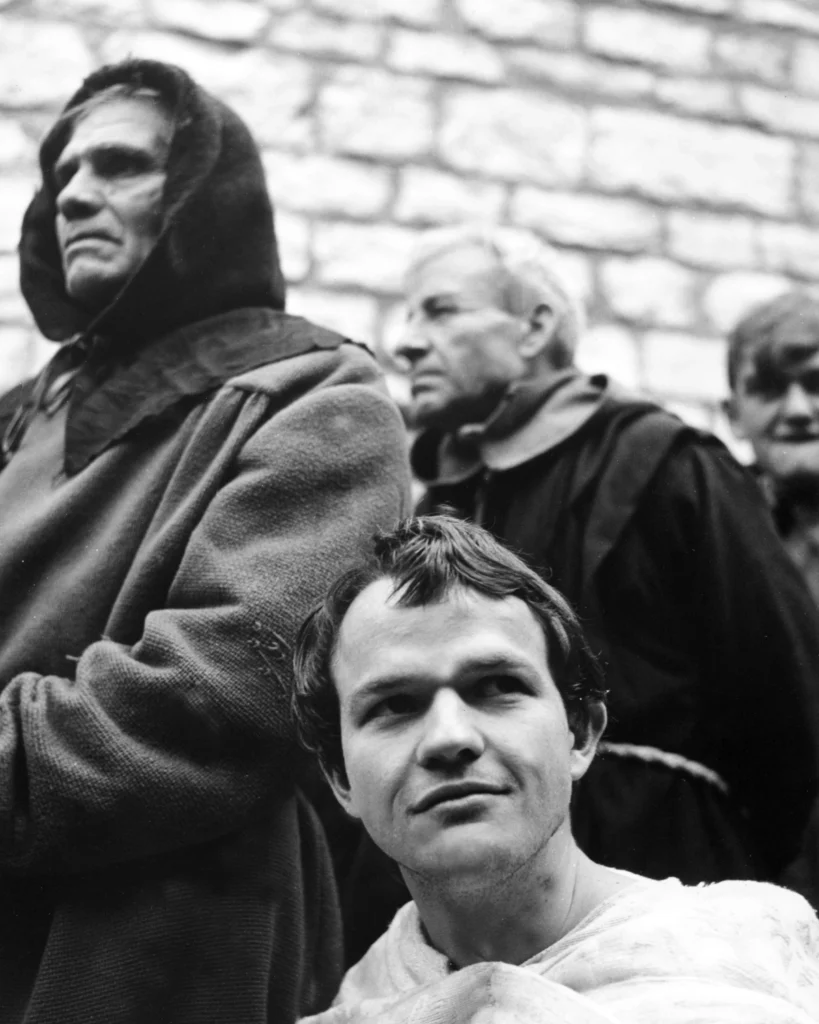
Francesco d’Assisi
Directed byRegia di Lilana Cavani
After a period of revelry with his friends, Francis experiences war, which leads him to change his life radically.
Having left his family amid scandal, he embraces a life of poverty, convinced that the world can be reformed by countering pride with humility and selfishness with charity.
Francis's example is soon followed by other companions who, with the approval of Pope Innocent III, preach the Franciscan rule.
Among his followers is Clare, who founds a community of women. As the movement he created continues to grow, Francis writes a new rule drawn entirely from the Gospel.
Sensing that death is near, he asks to be laid naked on the bare earth, before passing away on 3 October 1226.Francesco, dopo un periodo di baldorie con gli amici, conosce I’esperienza della guerra che lo porta a cambiare radicalmente vita.
Abbandonata la famiglia non senza scandalo, abbraccia la scelta della povertà, convinto che opponendo all’orgoglio l’umiltà e all’egoismo la carità si possa riformare il mondo.
Ben presto I’esempio di Francesco viene seguito da altri compagni che, sotto I’approvazione del Papa Innocenzo III, predicano la regola francescana.
Tra i suoi proseliti c’è Chiara, che dà vita ad una comunità femminile. Francesco, vista la crescita del movimento da lui creato, scrive una nuova regola ricavata interamente dal vangelo.
Sentendo ormai prossima la morte vuole essere adagiato nudo sulla terra, prima di spirare il 4 ottobre 1226.